

The Deep Meaning of the Verse “Bhakta-pada-dhuli”

bhakta-pada-dhūli āra bhakta-pada-jala
bhakta-bhukta-śeṣa — ei tina sādhanera bala
ei tina-sevā haite kṛṣṇa-premā haya
punaḥ punaḥ sarva-śāstre phukāriyā kaya
What is the dust of the lotus feet of the devotees? Bhakta-pada-dhūli. This is the external explanation of it actually. I am not saying to forget varnashrama-dharma, no. External does not mean we should give it up, but it is called secondary. Some people say, “Mahaprabhu is telling us to stop varnashrama-dharma.” No — you haven’t even started varnashrama-dharma, so how will you leave it? First you connect, then you leave. You are not even connected, yet you are thinking about leaving. How is that possible?
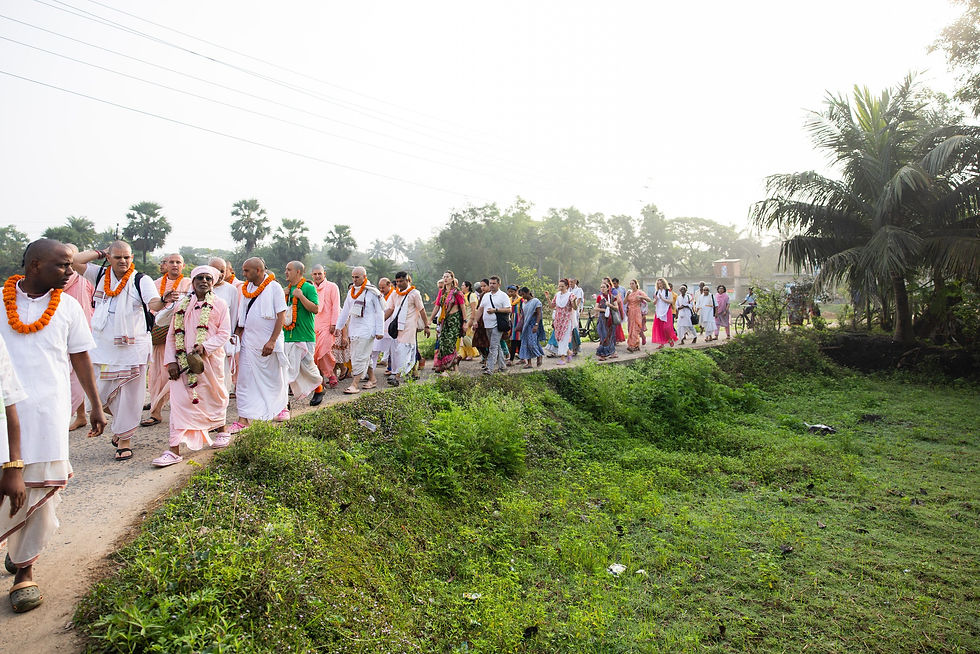
Bhakta-pada-dhūli — what is the inner teaching? Whatever path the devotees are following, you also have to follow that path. Just like when someone is walking and dust rises behind them, in the same way you should follow behind the devotees. Follow, do not imitate. What does a monkey do? It imitates. Whatever you do, it copies and imitates. Walk behind the devotees, follow behind the devotees, and follow their instructions. Then you will understand bhakta-pada-dhūli.
Sometimes someone forcefully takes the dust. A Vaishnava is coming and someone thinks, “Oh, I want the dust,” then pushes the Vaishnava and takes it. This is not good. It is very bad. Bhakta-pada-dhūli means to accept their teachings and walk behind them.
Second is bhakta-pada-jala, the foot-bathing water of the Vaishnava, charana. Srila Narottama dasa Thakura explains in Prema-bhakti-chandrika that you can take water from all the holy rivers, but it will never equal even one drop of the foot-bathing water from the lotus feet of a Vaishnava. You go to holy rivers, bathe there, and drink that water. In this way your sins are destroyed. But the foot-bathing water of a Vaishnava is so pure, unique, and unparalleled.
What is the main meaning? You should listen to hari-katha coming from their lotus lips. Listen to the hari-katha of the Vaishnavas — this is very important.
And next is bhakta-bhukta-śeṣa. Sādhanera bala. Honouring this gives one strength to engage in sadhana, devotional practices. Take the remnants of the devotees — that is maha-maha-prasada. It is very powerful. In Chaitanya-charitamrta, there is the story of Kalidasa and Jhadu Thakura, the uncle of Raghunatha dasa Gosvami. Jhadu Thakura came to a house carrying mangoes. He ate the mangoes and placed the discarded parts outside. Kalidasa was waiting outside and he began to eat those remnants. There was prema in them. Chaitanya-charitamrta explains this very beautifully — you can read this katha. The remnants of the devotees are extremely powerful.
What is the main import? All this was external. The deeper meaning is that you should listen to hari-katha and become absorbed in the mood of that katha also. Bhagavan accepts the mood.
bhakta-pada-dhūli āra bhakta-pada-jala
bhakta-bhukta-śeṣa — ei tina sādhanera bala
If you attain these three, then you will attain prema. All the scriptures glorify these things again and again. Have faith and follow them.
These three things are:
bhakta-pada-dhūli
bhakta-pada-jala
bhakta-bhukta-śeṣa
How should you accept them? With faith. You may listen to katha, but if you do not listen with faith, then you will not receive the fruit.

Date: 13 May 2026 Location: Delhi, India
Time Stamp - 00:23:20-00:30:20
Transcriber: Hari Bimohini dasi (USA)
Integrity check: Divya-premamayi dasi (Slovakia) Editor: Hari Bimohini dasi (USA), Divya-premamayi dasi (Slovakia) Proofreader: Chandrika dasi (UK) Photo: Navina-krishna dasa (Holland)


Comments